Somewhere between 52 and 60 BARVs (Beach Armoured Recovery Vehicles) were available for the Normandy Landings on D-Day and they’re one of the more unusual looking and striking vehicles the Allies landed.
During the assault and follow up phases these specialist armoured vehicles proved invaluable by recovering vehicles that had been swamped in the surf and rising tide, clearing broken down vehicles, and helping to shunt landing craft off the assault beaches.
DEVELOPMENT OF THE BARV
Developed and operated by the Royal Electrical Mechanical Engineers (REME) the Sherman BARV was a modification of the American Sherman M4A2 tank (Sherman III to us Brits!) and was essentially designed to recover stranded vehicles during beach assault landings.
The Sherman’s turret was removed and was replaced with an armoured superstructure, the hull was waterproofed, and deep wading trunking fitted. With these conversions the BARV could operate in up to 9ft of water with an 18-inch surge. Interestingly the Sherman III was selected as the chassis was of welded construction and it was thought waterproofing would be more successful. It was also felt a diesel engine would be less prone to the effects of immersion in cold sea water.
Due to time limitations they were not fitted with winches and were therefore limited to shunting, pushing and pulling disabled vehicles and small landing craft, but more on that later.
The BARV crew consisted of 5 including a diver whose job was to attach towing chains to semi-submerged vehicles. The driver was able to see very little, especially when the BARV was operating in deep water, so relied on the vehicle commander to direct. The BARV commander would therefore sit at the top of the vehicle looking out, in what must have been quite an exposed position.
OPERATIONAL USE
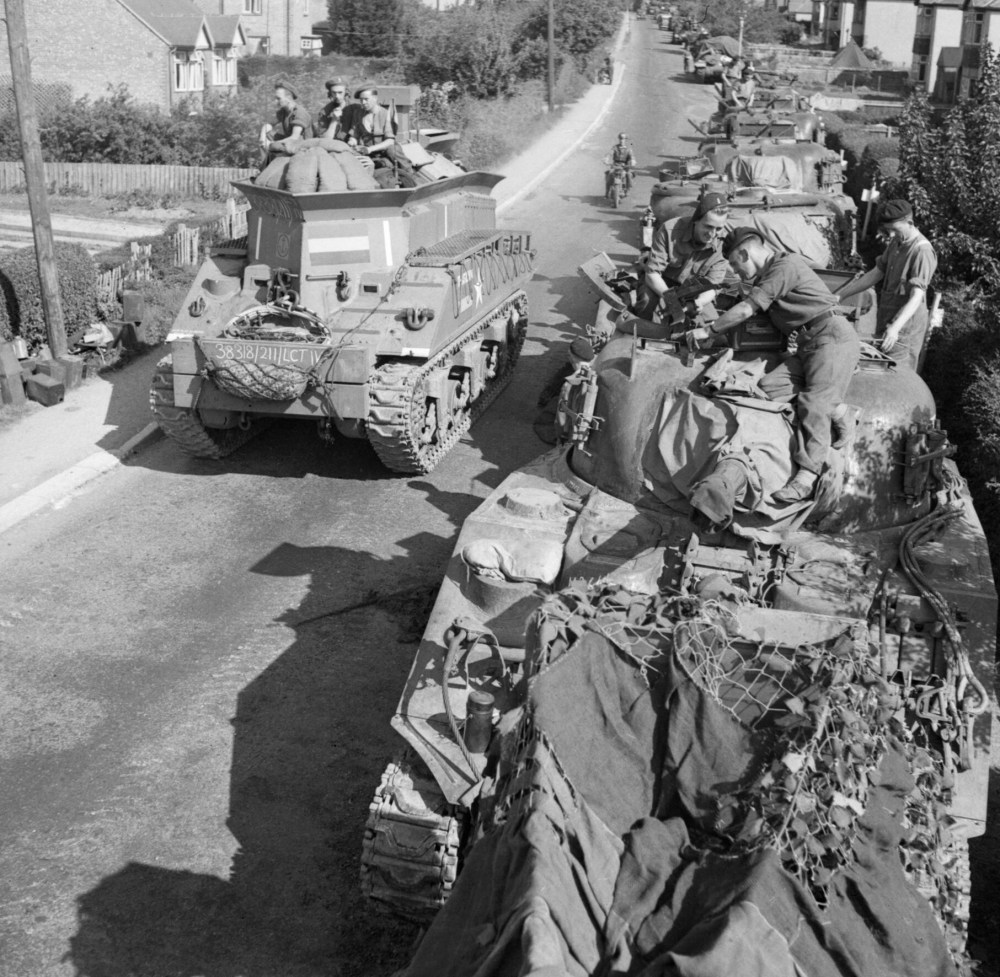
As mentioned, In action the Sherman BARV was used on the Normandy beaches to remove broken down/damaged vehicles, those that had been swamped in the surf or rising tide (especially a problem on Sword beach), and to re-float small landing craft stranded on the beach.
This was an important job; a crucial determinant of Allied success or failure on D-Day would be the quantity of vehicles disembarked and quickly – momentum had to be maintained. Keeping the beach clear of hazards to landing craft and ensuring access to the beach was one of the operational planner’s priorities. BARVs, though relatively small in number, would keep things moving.
BARVs were among the first vehicles to land in Normandy on D-Day, and operated within Beach Recovery Sections which consisted of 6 BARVs plus other vehicles including a DUKW. Each of the landing beaches were supported by two Beach Recovery Sections, one per Beach Group. You’ll be able to read more on the Beach Groups, especially for Sword, in a future Wargame Despatch.
Here are some examples of how the BARV supported operations, quoted from the REME website:
Diver Assisted Recovery: The BARV would reverse up to the front of the stranded tank and the diver would go overboard to attach a towing line. The BARV would then use sheer force to pull the stranded tank/vehicle ashore.
Clearing LST Launch Ramps: A tank getting stuck at the end of a launch ramp of an LST (Landing Ship Tank) would hold up the disembarkation of following vehicles. A BARV, following signals from the stranded tank commander, would approach backward. A tow line would then be attached. A good deal of slack was granted, with the BARV moving about 10 meters away from the stranded tank. This was to avoid the stranded tank suddenly rolling down the ramp and rear-ending the BARV. Once ready, the slack would be taken up, and the BARV would pull the tank up the beach.
Shunting: Should a tank be having trouble getting up the beach, the BARV would approach from the rear and use its wooden buffer block to push the tank up the beach. As mentioned above, the block was also used to push off empty landing crafts that have become beached.
Sherman BARVs provided sterling service during and after the landings, being placed in reserve until again seeing action for the Rhine crossings. Some Sherman BARVs continued in British service until 1963, when they were replaced by the Centurion BARV.
SHERMAN BARVS ON SWORD BEACH
On Sword beach BARVs were operated by 20 Beach Recovery Section (No 5 Beach Group) and 21 Beach Recovery Section (No 6 Beach Group, essentially a reserve for No 5) .
The first REME elements ashore were the BARVs which landed immediately after the assault and were closely followed by tractors and wheeled recovery vehicles. Recovered vehicle parks were established near the beaches for drowned tanks, guns and “B” echelon vehicles. These would eventually be collected and worked on by the appropriate unit Light Aid Detachments.
If you’re interested in seeing photos of the BARVs on Sword beach, or other beaches, the Imperial War Museum website is a great start.
MODELLING THE SHERMAN BARV
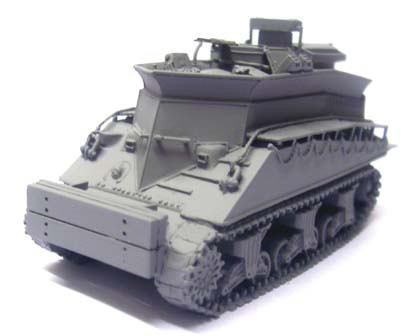
I’ve always liked the look of the BARV and the Milicast model looks a beauty, as below from the Milicast website.
Fortunately a fellow wargamer knew I was on the look-out for one and we struck a good deal.
Now this was my first Milicast model, being used to model kits and resin. I just had to keep reminding myself it’s not a PSC quick-build kit! A sharp Exacto blade and patience are key! Milicast models are known for quality casting, detail, and accuracy. The BARV doesn’t disappoint. Milicast models aren’t really known for being robust wargaming models, so I purposely left off some of the more delicate detail and also replaced the access ladder with a styrene version.

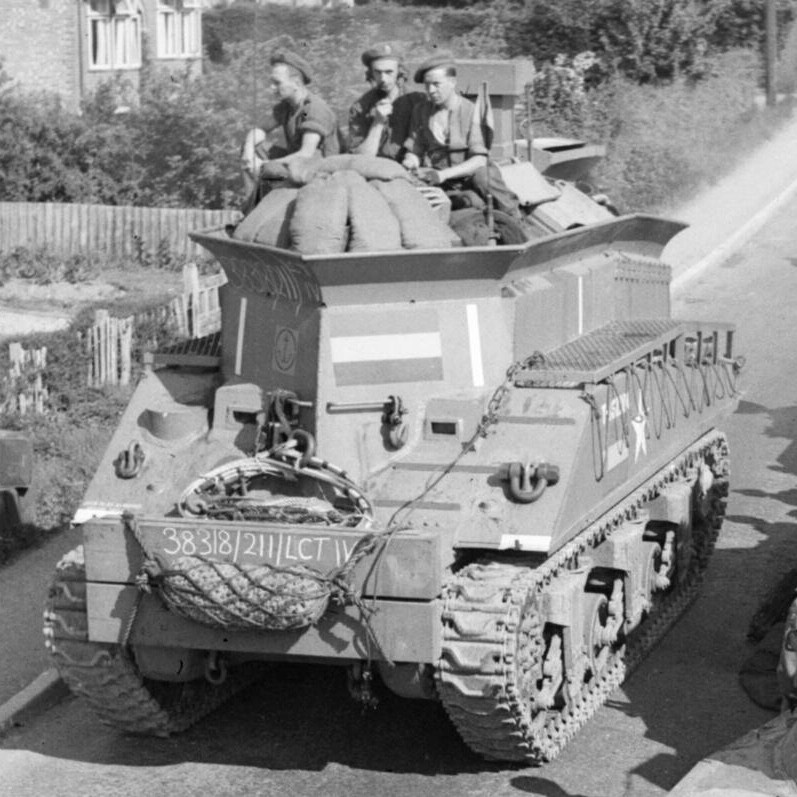
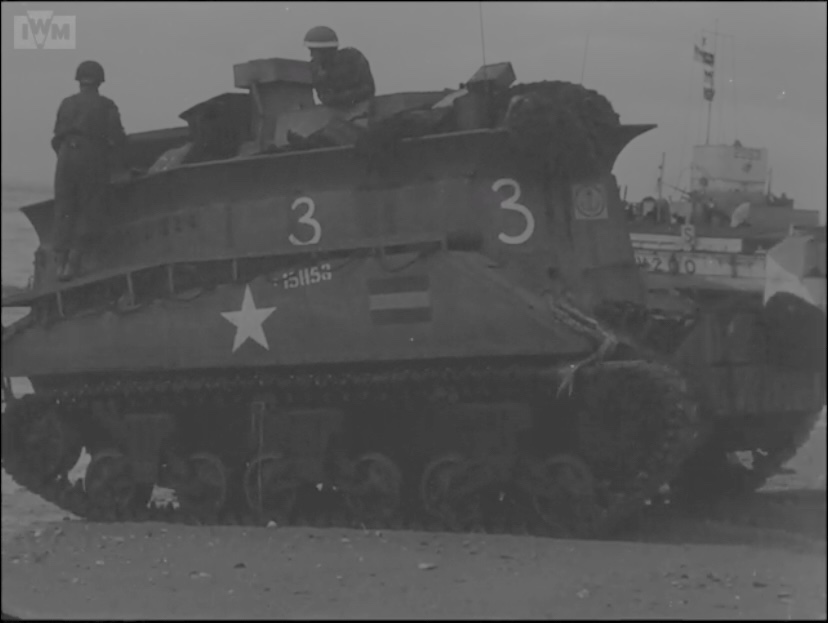
Once built I added some stowage from the spares box, inspired by the vehicle of 20 Beach Recovery Section in the photo below.
PAINTING GUIDE
These vehicles spent most of their time in the surf or near to it, so they were painted in a light grey, mid-grey, or blue-grey depending on your source. I’ve gone for a light blue-grey. Here’s a brief guide as to how I painted this beauty.
Step 1: Halfords Grey Primer rattle can.
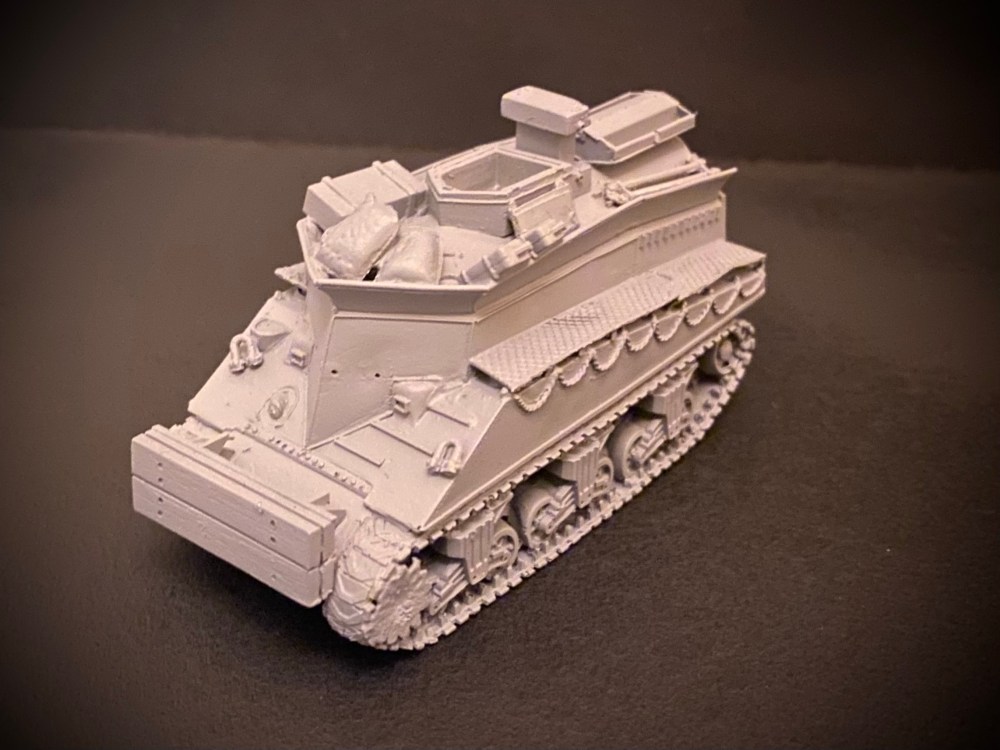
Step 2: Basecoat of Vallejo Model Colour Pale Grey Blue 70907 applied all over, followed by a second coat.
Step 3: Tracks painted with Vallejo Track Primer. Eyelets painted Vallejo Dark Rust.
Step 4: Wooden ‘bumper’ painted with Vallejo Panzer Aces New Wood 70311, followed by highlighting with Vallejo Panzer Aces Old Wood 70310.
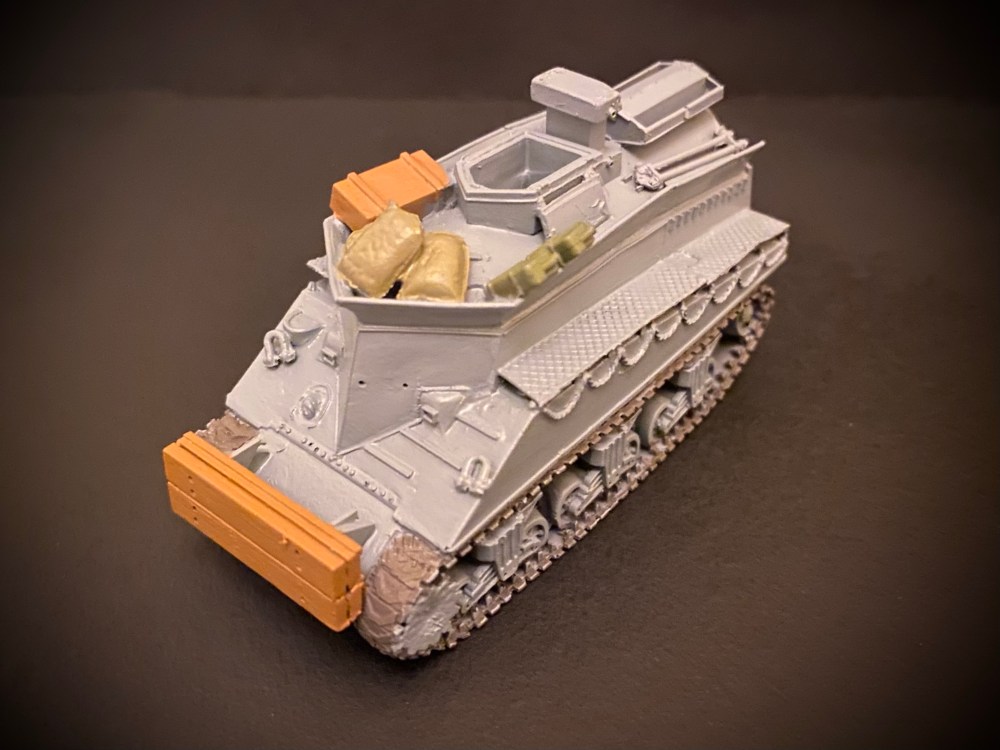
Step 5: Stowage items painted.
Step 6: Citadel Nuln Oil wash applied to tracks and jerry cans. A light Nuln Oil wash around details on the hull and the walk-ways. Including the rope.
Step 7: Citadel Agrax Earth Shade applied to the other stowage items and sparingly on the chassis.
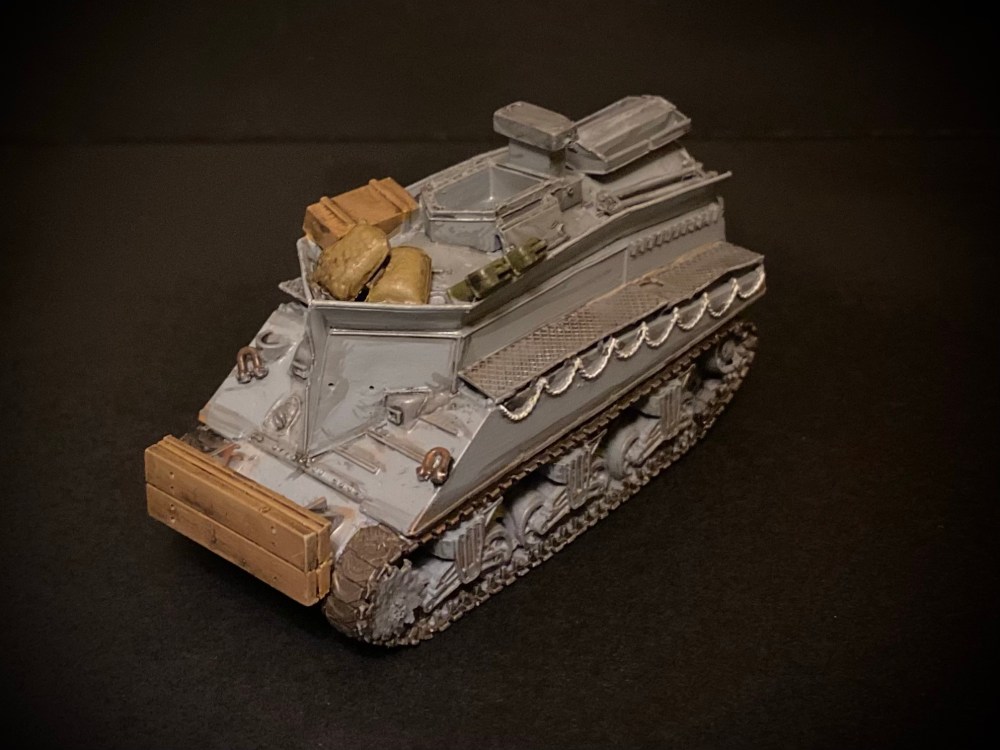
Step 8: Drybrush of VMC 70907 and a touch of white on raised areas, and a very light Khaki/White drybrush on wooden items and stowage. Ropes dry brushed white.
Step 9: Sparingly dry brushed corners and walk-ways with Dark Rust followed by Light Rust.
DECALS
As I am focused on Sword beach I’ve aimed to recreate a 20 Beach Recovery Section BARV, and the Sword Beach decal set from Dan Taylor Modelworks fits the bill perfectly,
It’s worth noting the BARVs of 20 Beach Recovery Section had large identifying numbers painted in white on the superstructure as seen in the still from the video IWM A70 41-8. In the last minute of the video you can clearly see these numbers on BARV 3.
The BARV modelled using the Dan Taylor decal set is number 1. So if you’re looking to model a different number BARV for Sword beach swap out the 1’s or you could hand paint them. It’s worth noting Beach Recovery Sections operating on the other beaches don’t appear to have these numbers, there is also some variance with placement of REME markings, tank census numbers and Allied recognition stars.
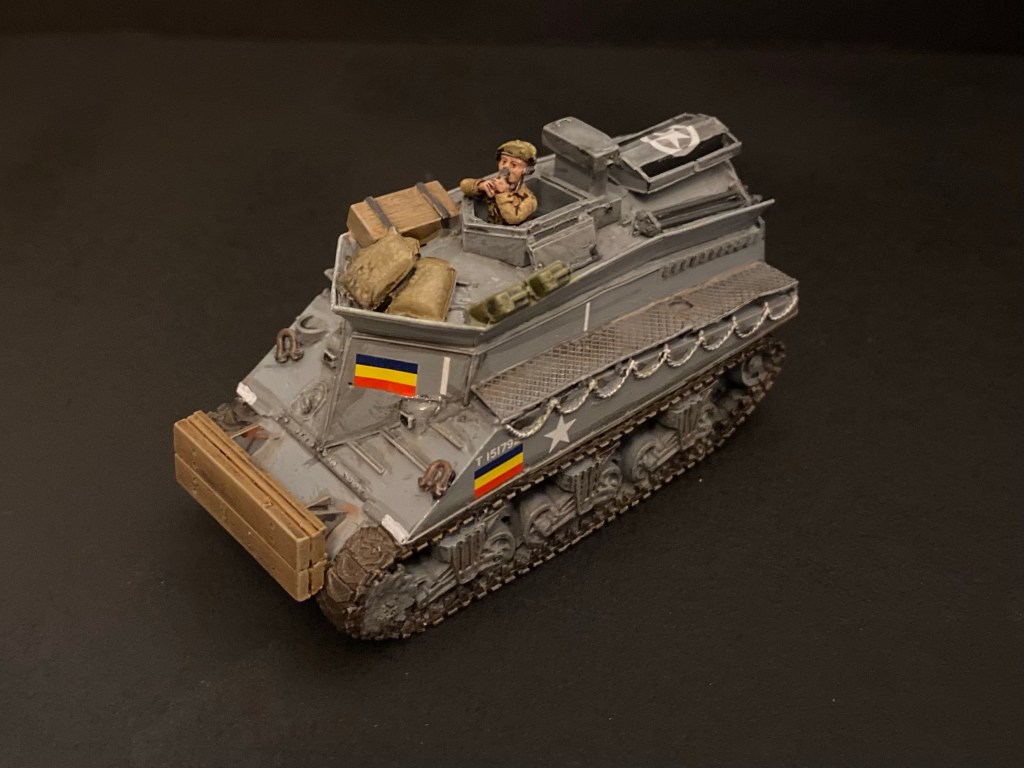

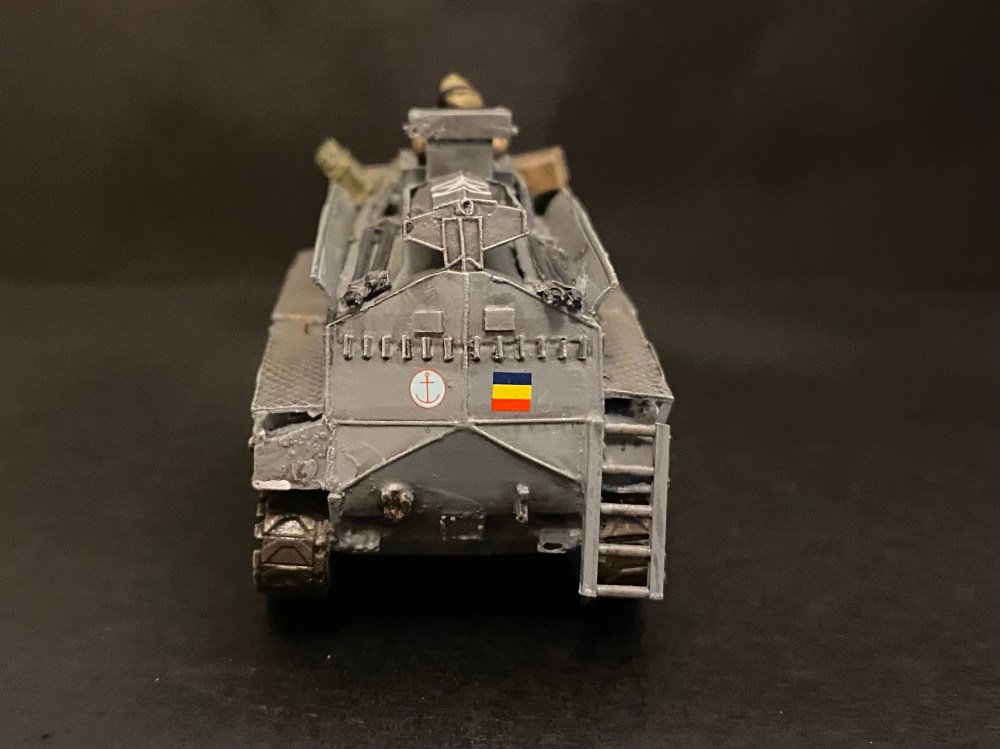
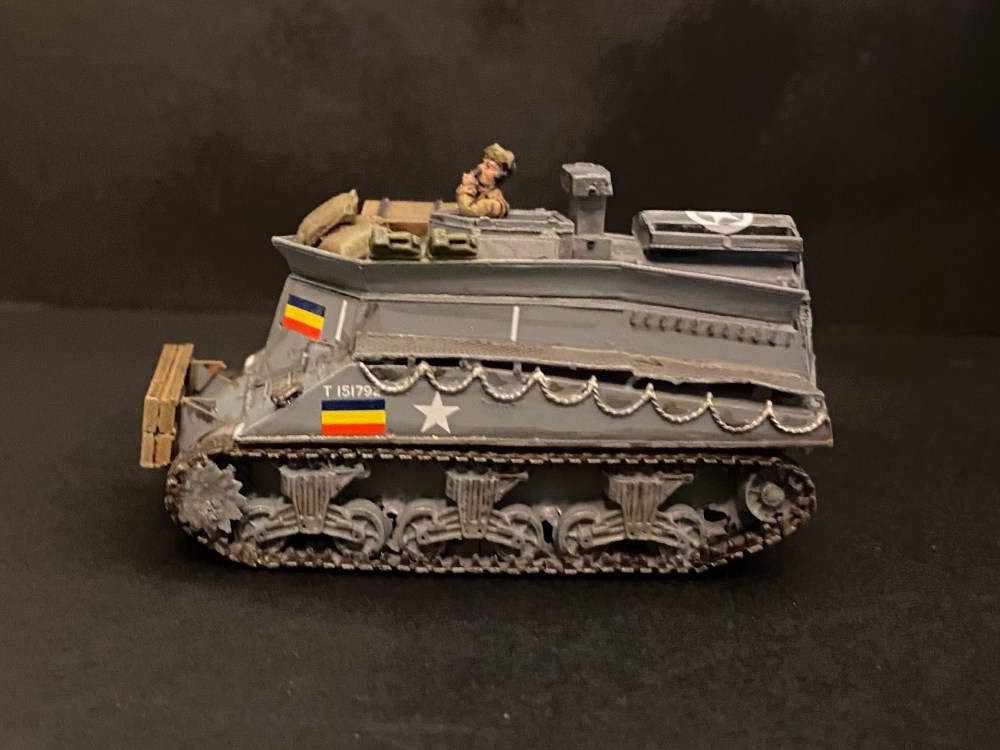
There we have it. The crew member will be swapped out for one with a helmet and I’ll paint in the white band to signify Beach Group on the helmet.
All in all I’m very happy with how this one has turned out, have learned some new skills, and feel confident attempting more challenging builds. I might even dig out the Photo Etch Sherman ARV conversion…
*Updated 5/2/23*
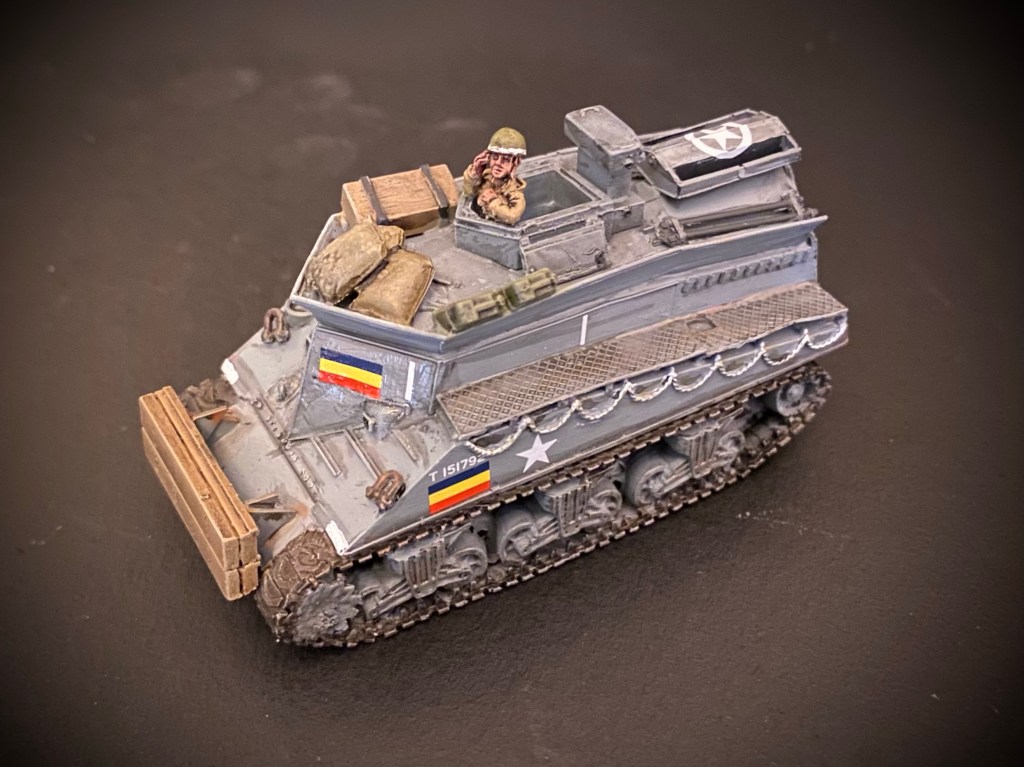
I’ve now changed the crew form a more generic one to a REME member of No 5 Beach Group, signified by the white band around his helmet.
SELECTED SOURCES & FURTHER READING
www.iwm.org.uk Video IWM A70 41-8
www.ww2talk.com “BARVs and Beach Recovery Sections, D-Day”
https://tanks-encyclopedia.com/ww2-uk-sherman-barv/amp/
www.rememuseum.org.uk “Collections in Focus: Sherman BARV”
 WARGAME DESPATCHES