Instantly recognisable, the Universal Carrier was widely employed by British and other forces during the Second World War.
THE UNIVERSAL CARRIER
Often (incorrectly) referred to as the Bren Carrier or Bren Gun Carrier due to a pre-war design, the Universal Carrier entered service in 1940.
This diminutive vehicle was used by British & Commonwealth forces in all theatres during the war as personnel transport and support weapon carrier, amongst others.
It’s not commonly known that the Universal Carrier is the most manufactured armoured vehicle in history. Over 100,000 were built in Britain, alongside Canada, Australia, and the USA.
Widely used across the Commonwealth and Empire forces, these carriers also found service with allied counties including Free French, Polish, and Czech forces. A couple thousand were shipped to Russia and to China. Axis forces also used captured examples, Germany especially converting them to a variety of weapons carriers.
Still operating into the 1960s, carriers were used operationally in many post-war hotspots. They often pop up on the military show circuit too.
UNIVERSAL CARRIER, DEEP WADING
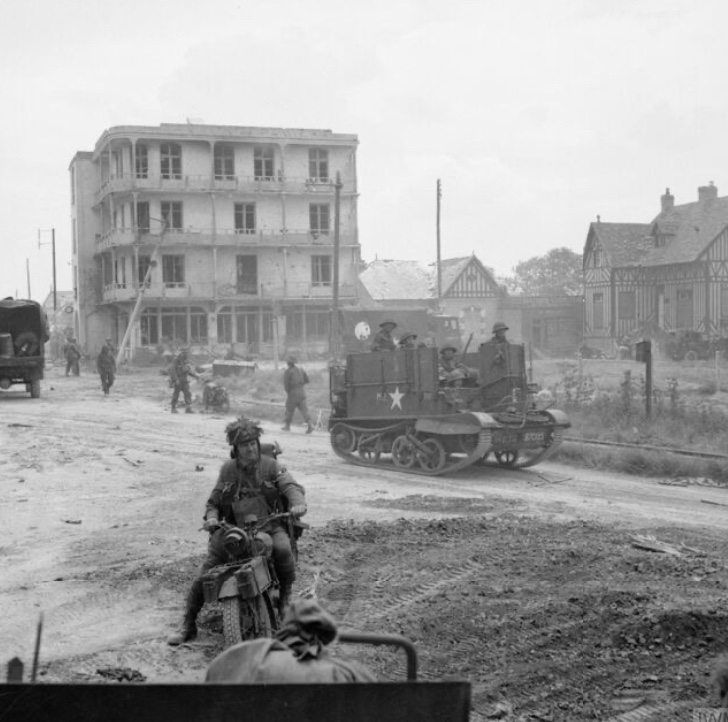
As the Universal Carrier was a key part of many British and Canadian units which were to take part in the Normandy landings, it was essential to make them able to disembark onto the beaches.
The solution was a set of steel panels with locking stakes attached via a series of brackets on the carrier hull. This significantly raised the profile of the vehicle. It also allowed a much greater space to be filled equipment, and this was well used!
WHAT ARE MY OPTIONS IN 20MM?
There are some options currently available for 20mm models. If you want an easy to put together version there is the Britannia model, but in my experience this one is starting to show its age and the quality isn’t great. While cheap, it needs quite some work to bring up to standard.
At the other extreme is the fantastic Milicast conversion kit in 1/76. Consisting of 11 Photo Etch parts it will work on the Milicast or Airfix carrier. While undoubtedly a beauty, for the 6+ I need it would blow quite a chunk of my Sword beach budget!
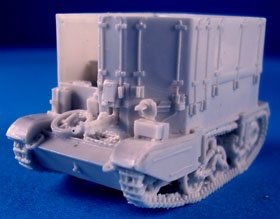
A third option is 3D printing. Now while I’ve started to print some useful bits I’m yet to find a decent wading carrier. Plus my design skills aren’t up to creating one either!
So after weighing up the options I thought why not create one myself?
CONVERSION
Once I’d found some clear sources online for images of the wading sheets, it was a choice of which carrier to use as the base model. There’s a lot of choice today for Universal Carriers but I kept it simple; with plenty of Plastic Soldier Company kits in the stash and in various stages of WIP, I went for that one.
Apart from tools, I’ve used 2mm styrene sheet and thin styrene rods for this conversion.
A learning curve here for me as I’ve not worked with styrene to this level before. A metal straight edge, sharp blade, and careful measuring are key!
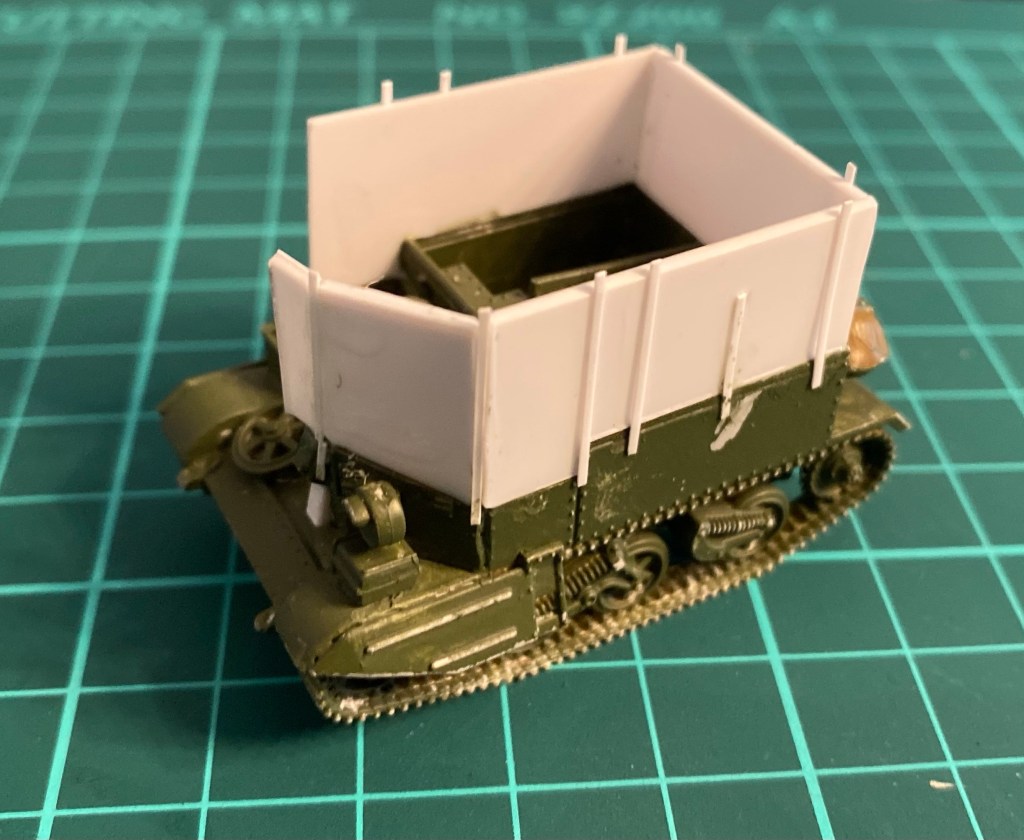
After some trial and error with card, here’s the ‘conversion kit’ I’ve come up with.

I superglued the wading sheets to the model and once secure I overlaid the rods (mostly 15mm in length), leaving some overhang at top and bottom. The bottom overhang also helps to secure the sheeting.
In operational use the panel in front of the driver was quickly removed once the landing had been made and for my conversion I’ve opted to leave this panel off.
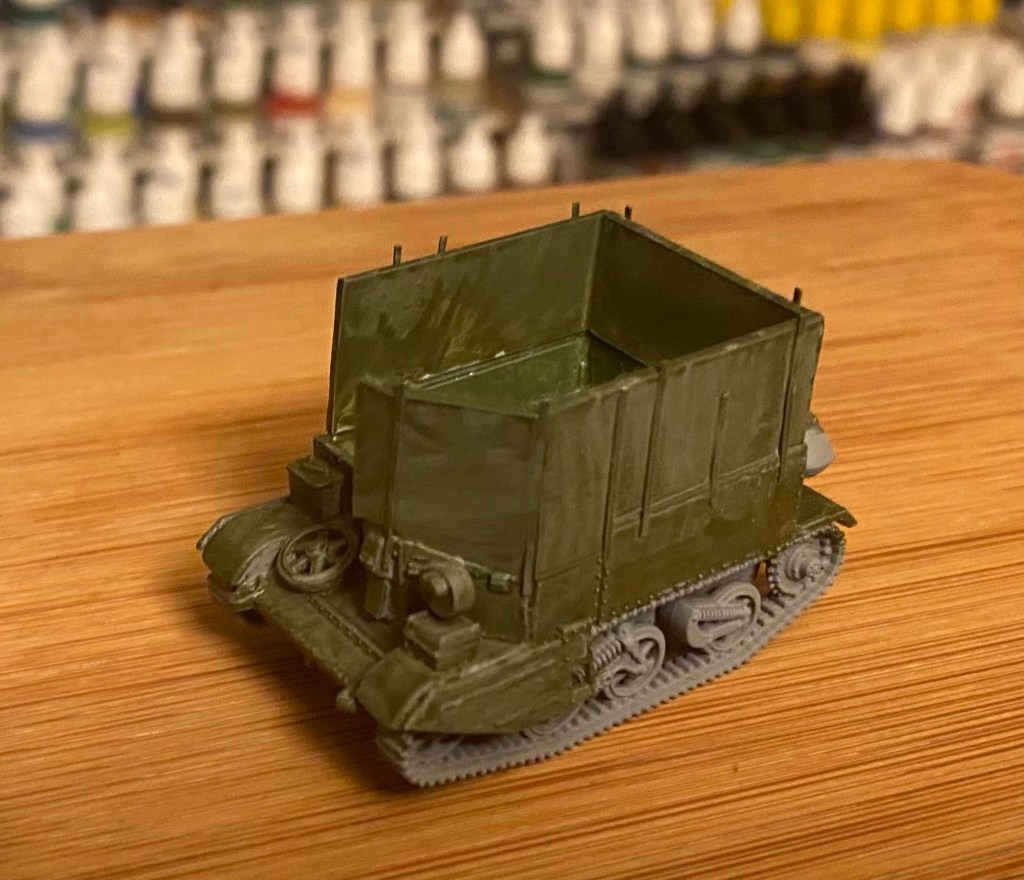

Decals and light weathering done and it’s ready to support the landings!
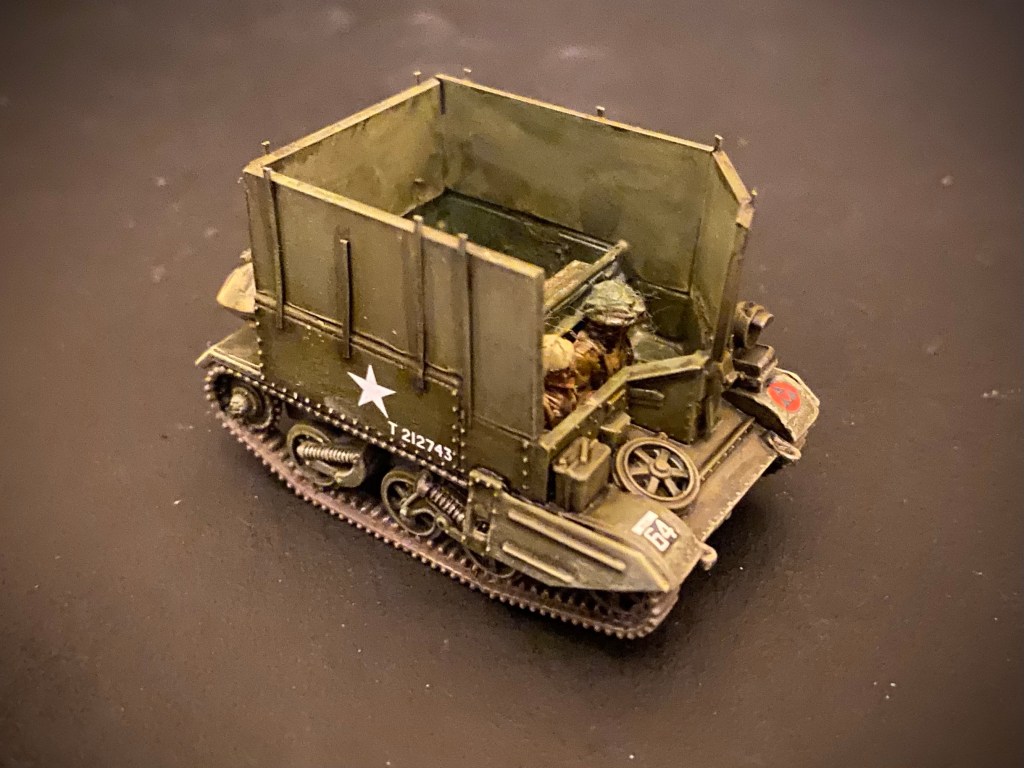
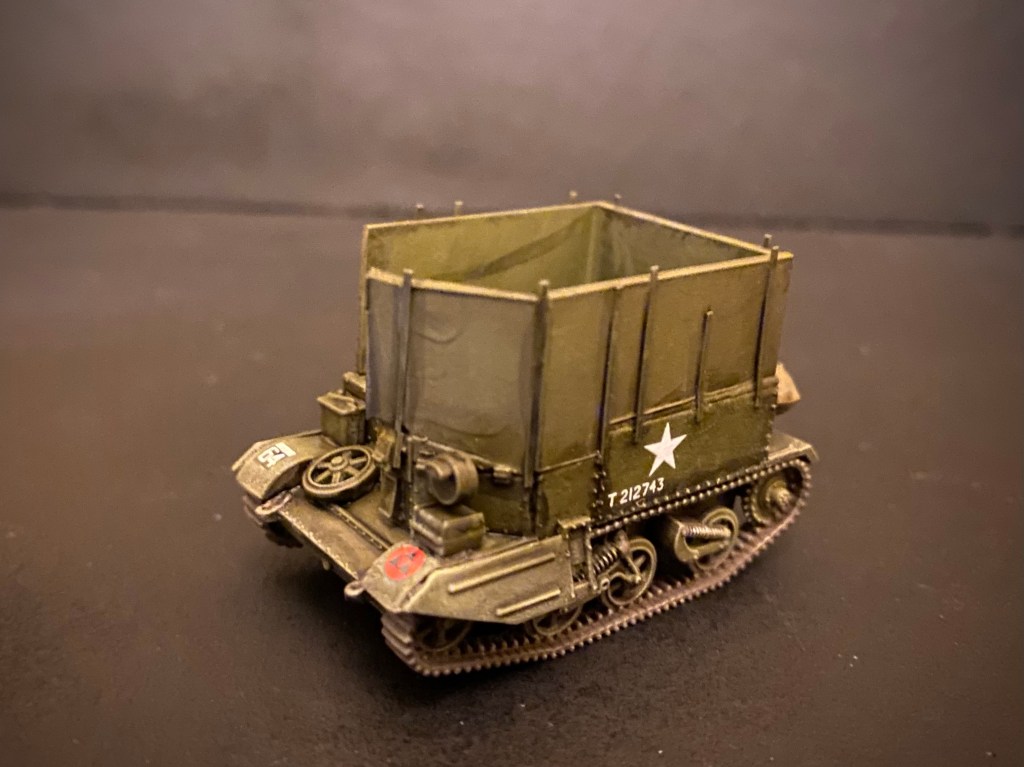
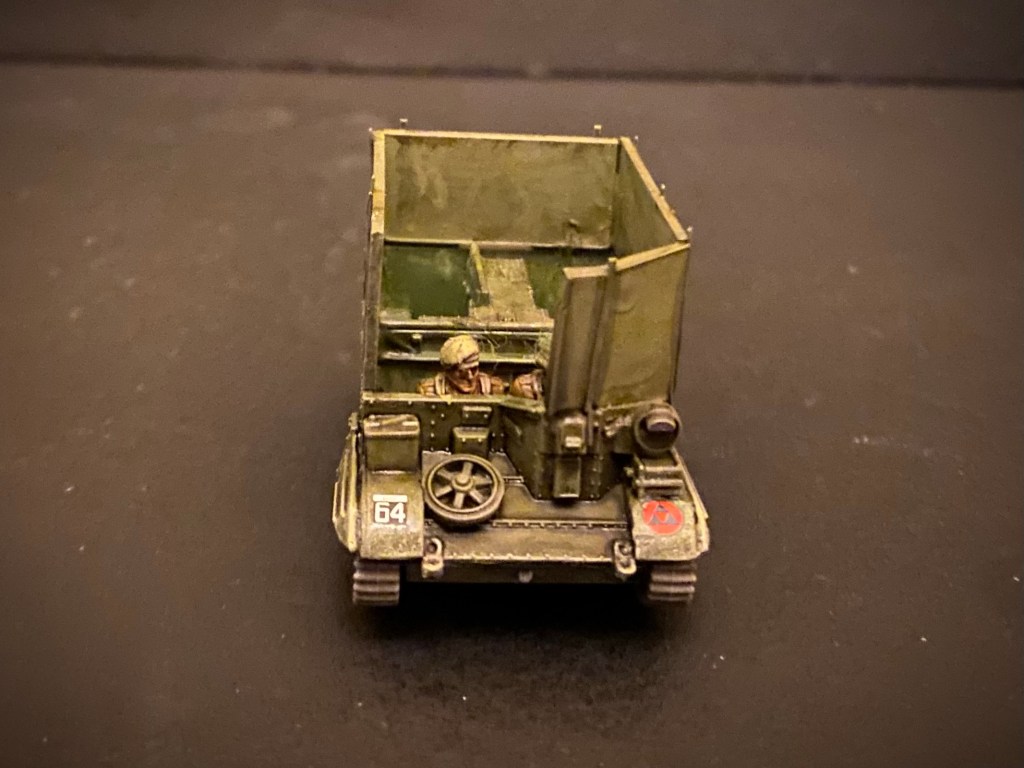

I’m pretty happy with this and it’ll serve well as a wargaming model. Now, only another 5 more to do. I best get started!
Featured image © IWM B 5038. Description: A Universal Carrier fitted with deep wading screens and motorcyclists of British 3rd Division in La Brèche d’Hermanville, 6 June 1944.
 WARGAME DESPATCHES
2 thoughts on “CONVERSION: Universal Carrier, Deep Wading”