One of the less well known of specialised armoured vehicles employed in the Normandy landings was the armoured bulldozer. Most were based on the Caterpillar D7 bulldozer, there was also a version built using the Caterpillar D8.
CATERPILLAR D7 BULLDOZER
An American designed and manufactured vehicle, the Caterpillar D7 medium bulldozer began service with the U.S. military during the Second World War. Its role included earthmoving, mine clearing, and supporting works of the engineers. On the landing beaches it was also used to clear beach obstacles, create gaps for following units, and to push/drag immobilised vehicles.
At least 10,000 D7 7M series ‘dozers were manufactured between 1940 and 1944 with the majority going to U.S. forces where it was known as ‘Tractor, Heavy, M1’.
IN BRITISH SERVICE
Mid-war the British War Department placed an order. This model became known as the D7A 1T1001 series and 138 were manufactured in 1943. This model was armour plated and was quite innovative.
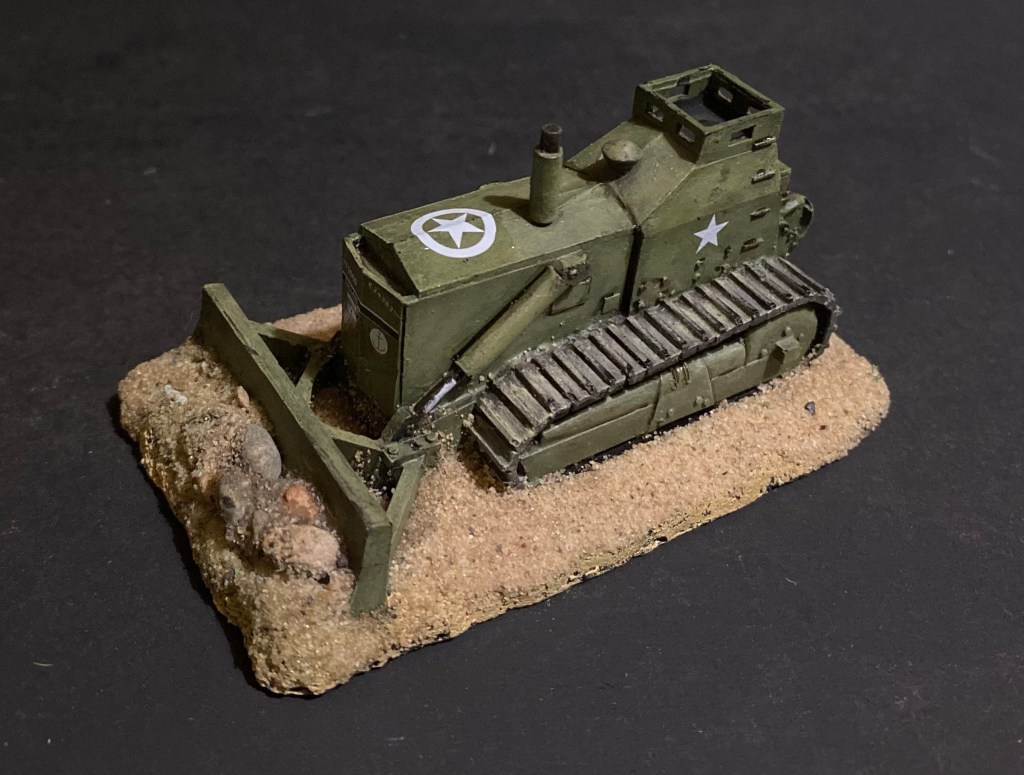
The use of hydraulics as on the D6 model, but not unarmoured D7s, meant there were no cables to be damaged by enemy action and the rear winch was available for use as needed. Additionally the use of a narrower dozer blade than other models meant it could be embarked and disembarked more easily from landing craft. An important consideration when landing craft space was at a premium.
Armoured D7s are still not especially well documented, or photographed, relative to other specialised armoured vehicles utilised on D-Day.
SERVICE ON SWORD BEACH
Armoured and unarmoured D7s, and other models, gave sterling service on the beach whether part of Royal Engineers Field Squadrons, supporting Assault Squadrons, or attached to Beach Groups. There seems to be agreement these vehicles were painted ‘green’ rather than ‘brown’, and likely SCC15.
The various markings on British Armoured D7s typically included the following;
- Arm of Service marking of the Unit – offside front of engine armour and rear.
- Manufacturer’s number of the bulldozer – this would have been 1T1xxx for Armoured D7s. Located offside front top of engine armour.
- Vehicle’s War Department Registration Number – the letter ‘E’ followed by 6 digits, located on the front top of the nearside engine armour plate. Often placed at an angle.
- Allied Recognition Star – located engine armour front top and also both sides of the driver’s cab. On some vehicles there would also be one located at rear. On most vehicles the engine armour star was the air recognition version contained in a white circle.
- LTIN/Loading code – noting for loading detail and LCT. Typically located at the front of the vehicle.
WHAT ARE MY OPTIONS IN 20MM?
We’re actually quite well catered for now, with good Armoured Bulldozers (mainly D7 version) available from Milicast, Raventhorpe, 1/72 Scale Miniatures amongst others. Again 3D print is an alternative.
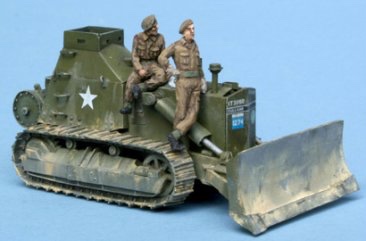
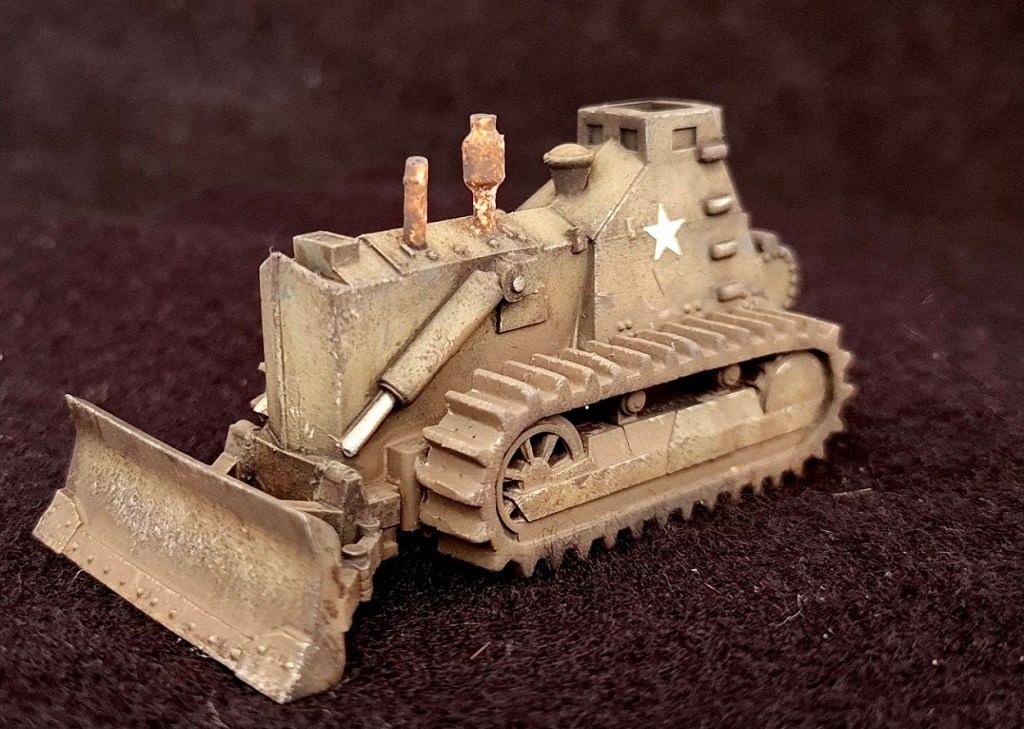
I went for the Raventhorpe version purely based on price, and after I’d finished the first I got a second. It’s a lovely crisp casting in a heavy resin, and with a good level of detail – good enough for the wargaming table!
BRINGING THE MODEL ALIVE
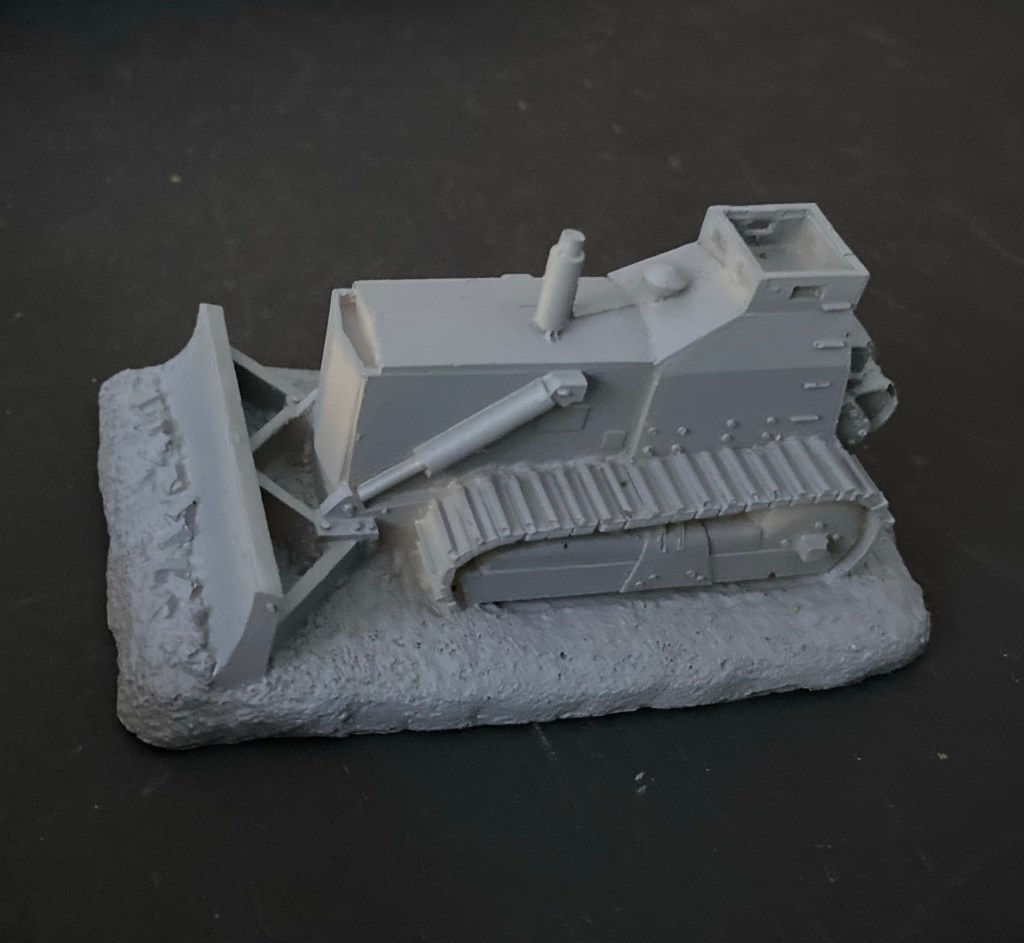
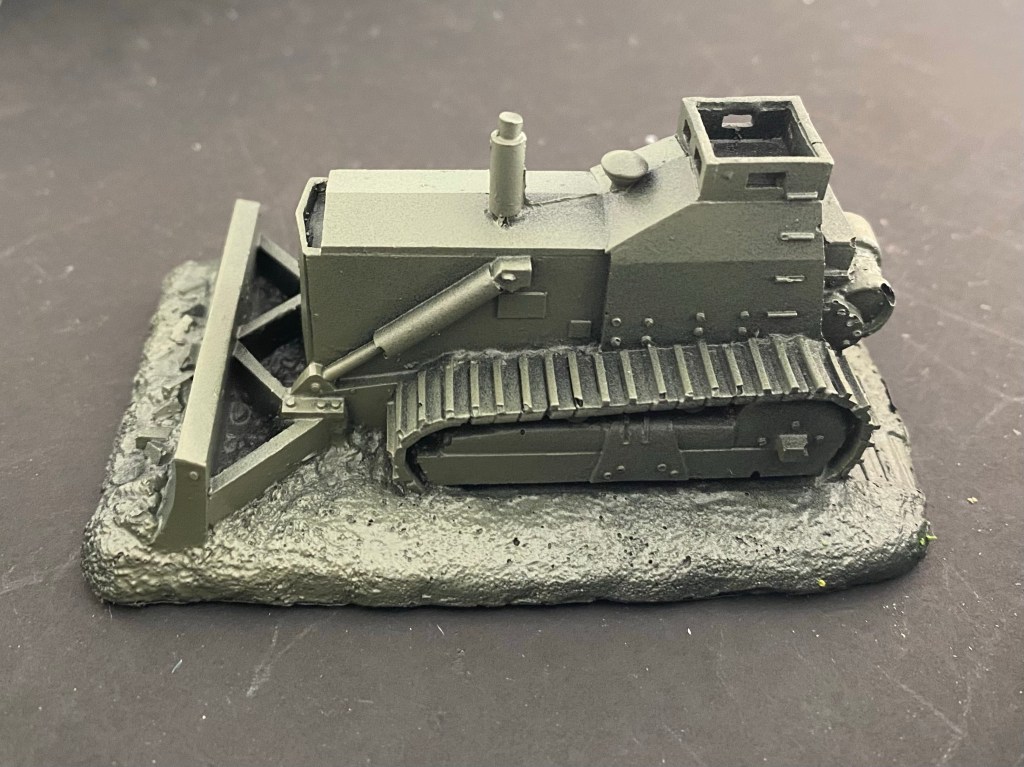
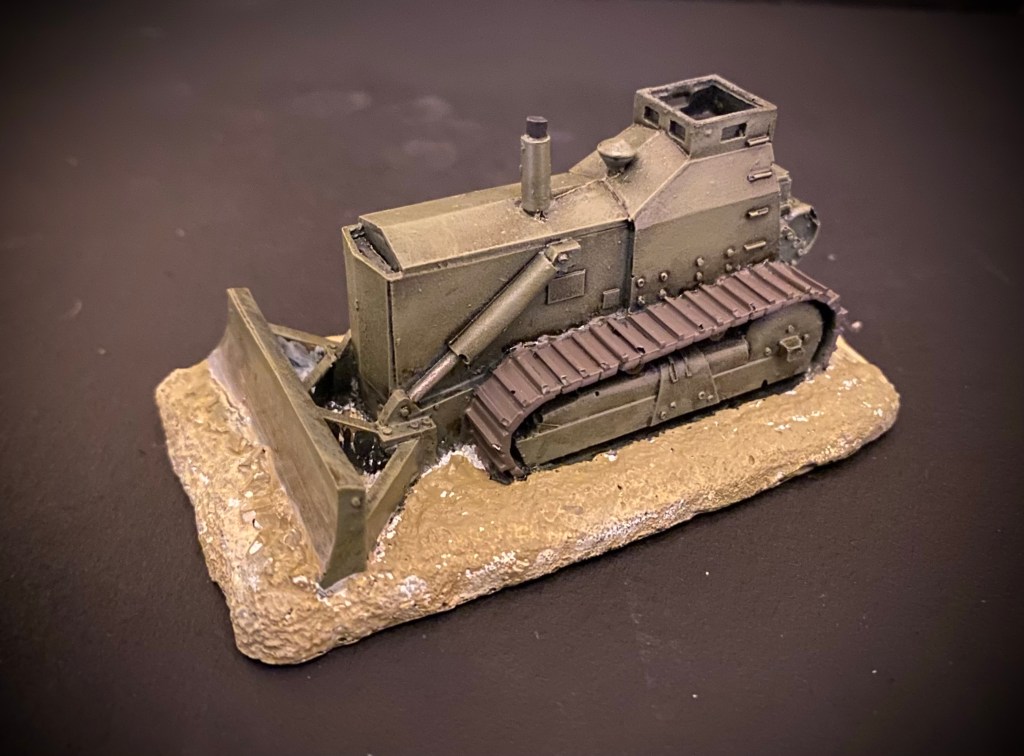
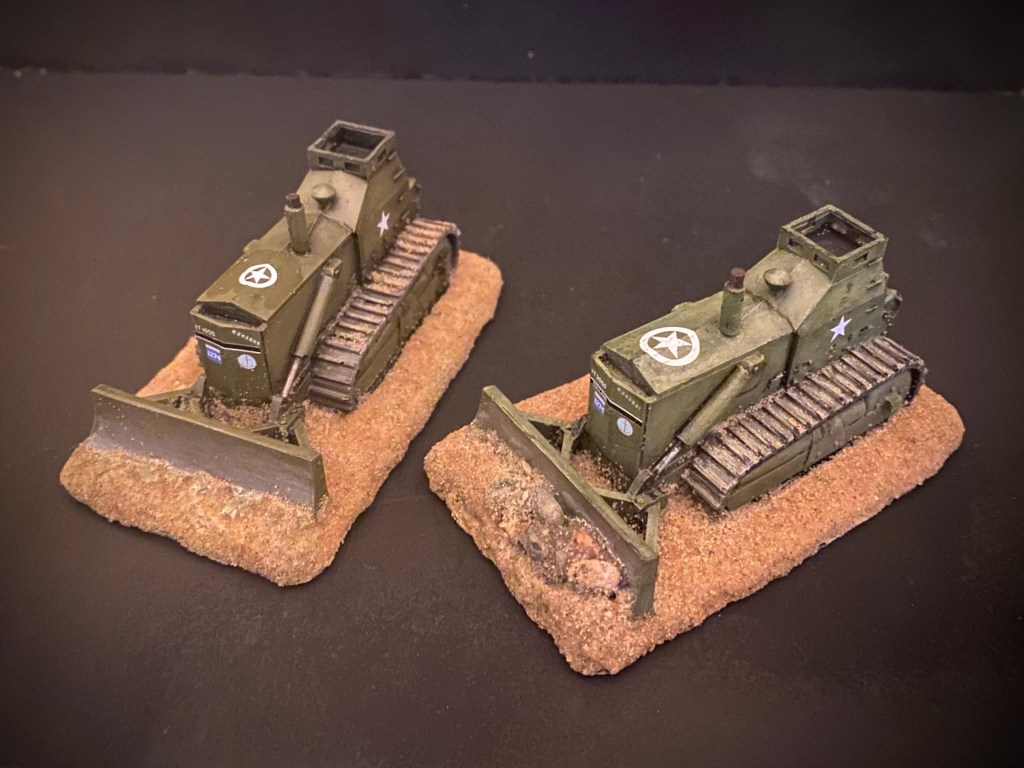
As I’m focusing on the British landing on Sword beach, I’ve opted to finish these as part of the Beach Group. Using the Dan Taylor Modelworks Sword Beach decals, this pair of D7s are based on Detachment 50 Mechanical Equipment Section Royal Engineers, attached Beach Groups, 101 Beach Sub Area.
Just need some crew now and they’ll be ready to hit the beach!
 WARGAME DESPATCHES
3 thoughts on “D7 Armoured Bulldozer”